

shape:yl6axe4-ozq= pentagon – Understand its Geometry
shape:yl6axe4-ozq= pentagon is a fascinating geometric figure that appears in various contexts, from architecture to natural forms. Whether you’re a geometry enthusiast or just curious about this polygon, understanding the shape of pentagon can offer valuable insights into its properties and applications. This article will delve into the details of the shape of pentagon, exploring its geometry, characteristics, and significance.
What is the shape:yl6axe4-ozq= pentagon
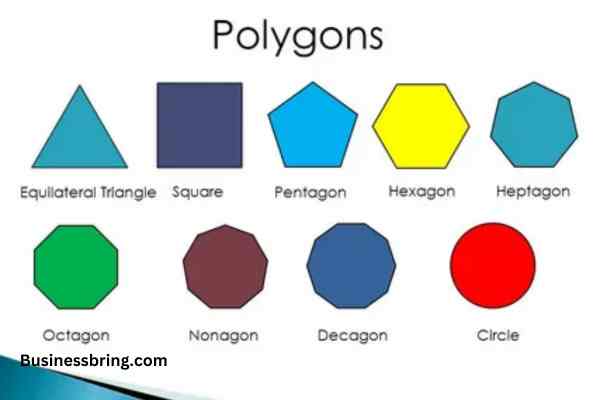
The shape:yl6axe4-ozq= pentagon is a five-sided polygon with distinct geometric properties. The term “pentagon but comes from the Greek words “penta,” meaning five, and “gonia,” meaning angle. In geometry, a pentagon is defined as a polygon with five edges and five vertices. This shape can be categorized into several types, including regular and irregular pentagons.
Characteristics of the shape:yl6axe4-ozq= pentagon
- Sides and Angles
- Regular Pentagon: In a regular pentagon, all five sides are of equal length, and each internal angle measures 108 degrees. This symmetry makes the regular pentagon particularly interesting in various design contexts.
- Irregular Pentagon: An irregular pentagon does not have equal sides or angles. The internal angles can vary, but their sum always equals 540 degrees, a key property of all pentagons.
- Diagonals
- The pentagon has five diagonals. In a regular pentagon, these diagonals are of equal length and intersect at a common point inside the figure, contributing to its symmetric beauty.
- Area Calculation
- For a regular pentagon, the area can be calculated using the formula: Area=145(5+25)×a2\text{Area} = \frac{1}{4} \sqrt{5 (5 + 2 \sqrt{5})} \times a^2Area=415(5+25)×a2 where aaa is the length of a side. but This formula highlights the mathematical elegance of the regular shape pentagon.
- Symmetry
- The regular pentagon exhibits rotational and reflectional symmetry. It has five lines of symmetry and can be rotated by multiples of 72 degrees and still appear unchanged.
Applications of the shape:yl6axe4-ozq= pentagon
- Architecture
- The pentagon is often seen in architectural designs. but The Pentagon building in Washington, D.C., is a prime example of how the shape:yl6axe4-ozq= pentagon can be utilized in constructing functional and iconic structures. The pentagon shape of this building allows for efficient space utilization and has become an enduring symbol of the U.S. Department of Defense.
- Art and Design
- In art and design, the pentagon’s symmetry and geometric properties are used to create visually appealing patterns and structures. Its regularity can be seen in various designs, from tessellations to decorative motifs.
- Nature
- The pentagon can be found in nature, particularly in the arrangement of petals in some flowers or the structure of certain marine organisms. This natural occurrence reflects the pentagon’s inherent balance and harmony.
Mathematical Significance
The shape:yl6axe4-ozq= pentagon is not just a geometric curiosity but also a subject of mathematical interest. Its properties are related to the golden ratio, a number often encountered in natural and artistic contexts. The golden ratio can be derived from the ratios of the diagonals of a regular pentagon. This connection to the golden ratio underscores the aesthetic but and mathematical significance of this shape.
Exploring Variations
- Concave Pentagon
- A concave shape pentagon has at least one interior angle greater than 180 degrees. This variation creates an inward dent on one or more sides, adding complexity to its geometric properties.
- Star Pentagon
- The star pentagon, or pentagram, is a five-pointed star formed by extending the sides of a regular pentagon. This intriguing figure combines the properties of the pentagon with those of a star but adding to its geometric allure.
Conclusion
Understanding the shape:yl6axe4-ozq= pentagon offers a glimpse into the rich world of geometry but From its distinct properties to its applications in various fields, this shape is a testament to the interplay between mathematical precision and aesthetic appeal. Whether in architecture, art, or nature, the it continues to inspire and intrigue. By exploring its characteristics and significance but we gain a deeper appreciation for this versatile and captivating geometric figure.
FAQs
A pentagon is a five-sided polygon. It can be regular, with all sides and angles equal but or irregular, with varying side lengths and angles.
The area of a pentagon can be calculated but using the formula: Area=145(5+25)×a2\text{Area} = \frac{1}{4} \sqrt{5 (5 + 2 \sqrt{5})} \times a^2Area=415(5+25)×a2 where aaa is the length of one side.
It appears in architecture, like the Pentagon building in Washington, D.C., in art and design, and even in natural formations such as certain flowers and marine life.