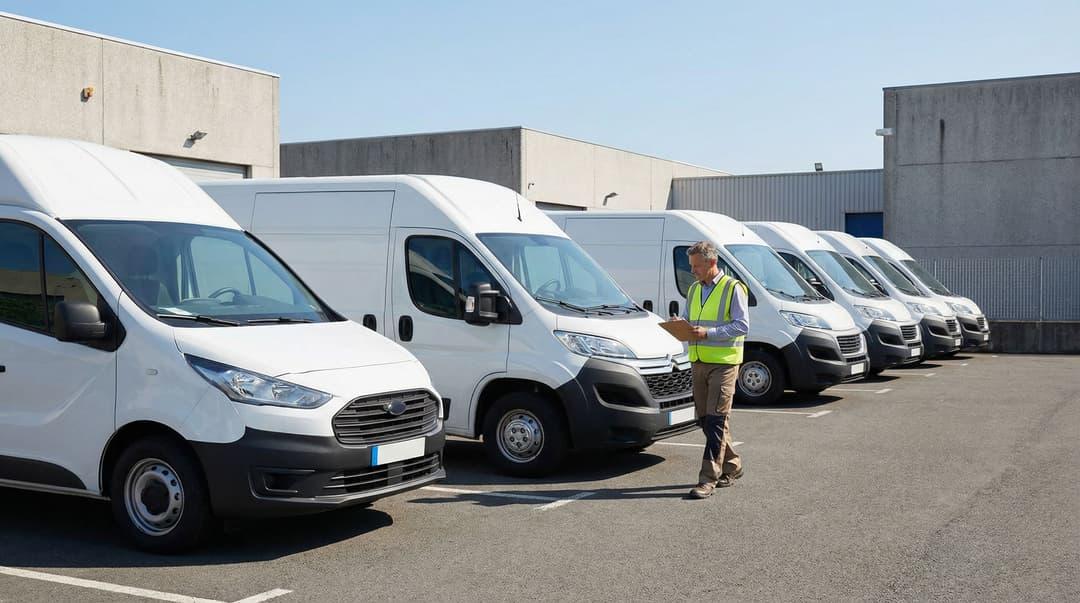
Business Auto Insurance Quotes: How to Compare Coverage and Save
If your business uses cars, pickup trucks, cargo vans, or other vehicles for work, finding the right insurance is an important part of managing your business risks. Comparing business auto insurance quotes can help you understand your coverage options, evaluate premiums, and choose a policy that fits your operations and budget.
Commercial auto insurance is designed for vehicles used for business purposes. Depending on the policy, it can help cover liability claims, damage to insured vehicles, and certain risks associated with employees driving for work. However, coverage varies by insurer, policy terms, vehicle use, and state requirements.
Whether you operate a landscaping company, manage a delivery service, run a contracting business, or own a small fleet, this guide explains how to compare quotes, what information insurers need, and how to make a more informed insurance decision.
What Are Business Auto Insurance Quotes?
Business auto insurance quotes are premium estimates provided by insurance companies or licensed insurance agents for commercial vehicle coverage. A quote generally reflects details about your business, vehicles, drivers, driving history, location, and requested coverage.
The final premium may change after the insurer verifies your information and completes underwriting.
Commercial auto insurance differs from personal auto insurance because business vehicles can involve different driving patterns, liability exposures, and operational risks. A company vehicle may travel longer distances, carry tools or equipment, make frequent deliveries, or be driven by multiple employees.
According to the National Association of Insurance Commissioners (NAIC), personal auto policies typically do not cover many business vehicle exposures, while commercial policies can offer higher liability limits and options for certain rented, non-owned, or employee-operated vehicles.
Before requesting quotes, identify how your vehicles are actually used. This helps insurers assess your needs and reduces the risk of selecting a policy that does not fit your operations.
Who Needs Commercial Auto Insurance?
Commercial auto insurance may be appropriate for businesses that own vehicles or use vehicles regularly to perform work.
Common examples include:
- Contractors and construction companies: Pickup trucks, work vans, and vehicles transporting equipment to job sites.
- Delivery businesses: Cars, vans, and trucks used to transport packages, groceries, or other goods.
- Landscaping companies: Trucks and other vehicles used to transport workers, tools, and supplies.
- Cleaning and maintenance services: Vehicles traveling between customer properties.
- Retail and wholesale businesses: Vehicles used for deliveries, collections, and supply runs.
- Professional service businesses: Company-owned vehicles used for client visits and business travel.
- Companies with employee drivers: Businesses that allow employees to drive company vehicles or use personal vehicles for work-related errands.
Not every business trip automatically requires a separate commercial policy. Some personal auto policies allow certain incidental business uses, depending on the insurer and policy wording.
However, a vehicle used primarily for business, a vehicle owned by a company, or a vehicle used for higher-risk commercial activities may require commercial coverage. Confirm the appropriate policy with your insurer or a licensed insurance agent.
What Does Commercial Auto Insurance Cover?
The coverage included in a business auto insurance policy depends on the policy form, selected options, exclusions, and applicable state law.
Understanding the main coverage types makes it easier to compare quotes accurately.
1. Bodily Injury Liability
Bodily injury liability can help pay covered claims when an insured driver is legally responsible for injuries to another person in an accident.
Depending on the policy, covered expenses may include medical costs, lost income, and legal defense associated with a covered lawsuit, subject to policy terms and limits.
2. Property Damage Liability
Property damage liability can help cover damage your insured driver causes to someone else’s property in a covered accident. Examples include another vehicle, a fence, or a building.
This coverage protects against specified third-party claims; it does not automatically pay to repair your own business vehicle.
3. Collision Coverage
Collision coverage can help pay for covered damage to an insured vehicle resulting from a collision with another vehicle or object, or from an overturn.
A deductible usually applies. Your business pays the deductible amount specified in the policy before the insurer pays the covered balance.
4. Comprehensive Coverage
Comprehensive coverage generally addresses covered vehicle damage caused by events other than collision. Depending on the policy, examples may include theft, fire, hail, falling objects, or certain weather-related damage.
Check exclusions and deductibles carefully. Comprehensive coverage does not mean every possible loss is covered.
5. Uninsured and Underinsured Motorist Coverage
Where available and applicable, uninsured or underinsured motorist coverage may help protect insured people when an at-fault driver has no insurance or insufficient insurance.
Requirements and coverage structures differ by state, so confirm which options apply to your business.
6. Medical Payments or Personal Injury Protection
Medical payments coverage or personal injury protection (PIP), where available, may cover certain medical expenses after an accident, regardless of fault. The details and availability depend on the state and policy.
7. Hired and Non-Owned Auto Coverage
Hired and non-owned auto coverage can help address certain liability exposures when a business rents vehicles or employees use personally owned vehicles for company business.
For example, an employee might use a personal car to deliver documents or visit a customer. The employee’s personal policy may not fully address the business’s liability exposure.
This coverage does not automatically insure every rented or employee-owned vehicle against physical damage. Ask the insurer exactly what is included.
How to Compare Business Auto Insurance Quotes
The cheapest quote is not necessarily the best choice. A useful comparison looks at both price and the protection each policy provides.
Step 1: Identify Your Business Vehicle Needs
Make a list of every vehicle used for business and record who owns it.
Include:
- Cars, pickups, vans, and trucks.
- Company-owned, leased, and rented vehicles.
- Vehicles employees drive for work.
- The main purpose of each vehicle.
- Typical travel distances and operating areas.
- Tools, equipment, or goods transported.
Accurate information helps insurers evaluate the correct risk.
Step 2: Gather Your Business Information
Insurers may request your legal business name, address, industry, years in operation, estimated annual mileage, and details about how vehicles are used.
You may also need vehicle identification numbers (VINs), registration information, driver details, and current insurance documents.
Requirements vary by insurer, so ask what information is necessary before beginning the application.
Step 3: Request Multiple Quotes
Contact several insurers or work with an independent insurance agent who can compare options from different companies.
When possible, request quotes using the same coverage limits, deductibles, vehicle information, and driver details. Otherwise, a lower premium may simply reflect less protection.
Record the insurer, quoted premium, payment schedule, deductible, liability limits, and any major exclusions.
Step 4: Compare Coverage Limits
Liability limits determine the maximum amount the insurer will pay for covered claims under the applicable policy terms.
A policy with a lower limit may cost less, but it can leave your business exposed if a serious accident results in claims exceeding that limit.
Consider the size of your business, the type of work performed, contractual requirements, the vehicles involved, and the potential financial impact of an accident. Ask a licensed agent to help assess appropriate limits.
Step 5: Review Deductibles and Exclusions
A deductible is the amount your business must generally pay toward a covered loss before the insurer pays the remaining eligible amount.
A higher deductible may reduce the premium, but it also increases your potential out-of-pocket expense after a claim.
Review exclusions involving drivers, vehicle use, cargo, rented vehicles, and other business-specific exposures. Never assume a coverage is included simply because it appears in an online quote summary.
Step 6: Check the Insurer and Finalize the Policy
Before buying, check the insurer’s licensing status with your state’s department of insurance. Review its financial strength information, claims process, customer service options, and policy documents.
Ask for a written explanation of anything unclear.
Do not cancel existing coverage until you have confirmed that the replacement policy is active and provides the protection your business needs.
What Affects Business Auto Insurance Costs?
There is no single commercial auto insurance price that applies to every US business. Insurers calculate premiums based on the risks associated with the applicant, the vehicles, and the requested coverage.
The following factors can affect your quote.
Business Type and Vehicle Use
A company that uses a vehicle for occasional client visits may have a different risk profile from a business that makes frequent deliveries or transports heavy equipment.
The insurer will consider the nature of the work and how vehicles are used.
Number and Type of Vehicles
The number of insured vehicles, their values, repair costs, and vehicle classifications can influence premiums.
A business operating several vehicles may have different underwriting options from a business insuring a single car.
Driver Records and Experience
Accidents, traffic violations, driving experience, and other driver-related factors may affect underwriting and pricing.
Maintaining safe driving practices and reviewing driving qualifications before assigning company vehicles can help manage risk.
Location and Operating Radius
Where a business operates matters. Traffic density, theft exposure, weather-related losses, and other regional conditions can influence insurance pricing.
A business that operates across multiple states should explain its full operating territory when requesting quotes.
Annual Mileage
Vehicles that spend more time on the road may have greater exposure to accidents. Insurers may ask for annual mileage estimates and details about typical routes.
Provide realistic figures rather than understating mileage to obtain a lower initial quote.
Claims History
Previous claims can affect how an insurer evaluates the business’s risk. The impact depends on the claim details, underwriting rules, and other factors.
Accurate claims records and a documented safety program can help insurers understand how your business manages risk.
Coverage Limits and Deductibles
Higher limits generally provide more financial protection and may increase premiums. Choosing a higher deductible may reduce the premium, but increases what you must pay toward a covered claim.
Compare these trade-offs before choosing a policy.
How to Find Affordable Business Auto Insurance Quotes
You cannot guarantee the lowest premium, but you can take practical steps to improve your comparison process and manage avoidable risks.
Compare equivalent policies. Request quotes with the same liability limits, deductibles, and coverage options. This is the best way to understand whether one insurer offers better value.
Maintain a driver safety program. Set clear expectations about distracted driving, vehicle maintenance, safe following distances, and accident reporting.
Review your vehicle list regularly. Notify your insurer when you add, sell, replace, or change the use of a vehicle. Incorrect vehicle information can create coverage problems.
Ask about available discounts. Depending on the insurer, business, and state, potential savings may be available for safety features, fleet arrangements, bundled policies, or other qualifying characteristics. Discounts are not guaranteed.
Choose deductibles carefully. Consider whether your business could comfortably pay the deductible after a covered loss. A small premium reduction may not justify a deductible that strains your cash flow.
Consider risk-management technology. Some insurers offer telematics or fleet monitoring options. Ask how the program works, what data it collects, and whether participation affects your premium or renewal terms.
Review coverage at renewal. Your vehicle count, employees, operating radius, and business activities may change over time. Update your policy to reflect those changes.
Avoid reducing essential coverage solely to achieve a lower quote. A policy should fit your financial exposure and operational needs.
What Information Do You Need to Get a Quote?
Preparing your information in advance can make the quote process more efficient.
| Information | Why insurers may need it |
|---|---|
| Business name and address | Identifies the applicant and operating location |
| Industry and business activities | Helps assess the type of risk |
| Vehicle details and VINs | Identifies vehicles and their characteristics |
| Vehicle ownership | Establishes whether vehicles are owned, leased, or otherwise used |
| Driver information | Helps assess driver-related risk |
| Driving and claims history | Supports underwriting |
| Annual mileage and operating radius | Helps estimate road exposure |
| Requested coverage limits | Determines the level of protection requested |
| Deductible preferences | Helps compare coverage and out-of-pocket costs |
| Current insurance details | May help assess existing coverage and continuity |
An insurer may request additional information depending on the business and vehicles. Use accurate, consistent details across applications.
Business Auto Insurance Requirements by State
Auto insurance requirements are not identical across the United States. Most states require some form of auto liability coverage, but minimum limits and additional requirements vary.
Commercial vehicles may also be subject to specific rules based on vehicle weight, business activity, interstate operation, or the type of goods or passengers transported.
For example, a local service van may face different requirements from a heavy commercial truck operating across state lines. Businesses should not assume that meeting a basic personal auto insurance minimum is sufficient for commercial operations.
To check applicable rules:
- Visit your state’s department of insurance website.
- Review the state motor vehicle agency’s insurance requirements.
- Determine whether your vehicles are subject to additional commercial or industry-specific rules.
- Check any insurance limits required by customer contracts, leases, lenders, or licensing arrangements.
- Confirm interstate operating requirements with the appropriate state or federal regulator when relevant.
Your insurer or licensed agent can help identify the requirements that apply to your vehicles and business activities.
National Association of Insurance Commissioners
Common Mistakes to Avoid When Comparing Quotes
Even a competitive premium may not be a good deal if the policy does not match your business needs.
Watch out for these common mistakes:
- Choosing on price alone: Lower premiums can come with lower limits, higher deductibles, or narrower coverage.
- Misrepresenting vehicle use: Incorrect information about deliveries, mileage, drivers, or operating territory can create problems.
- Assuming personal insurance covers everything: Business-related use may be limited or excluded under a personal policy.
- Forgetting employee-owned vehicles: Employees who drive personal cars for work can create liability exposures for the business.
- Ignoring exclusions: Review the policy wording rather than relying solely on a quote summary.
- Overlooking state-specific rules: Requirements may vary according to location and vehicle use.
- Allowing coverage to lapse: Coordinate policy dates carefully when switching insurers.
Take time to understand the policy before signing. If an insurer’s explanation differs from the written policy, request clarification in writing.
Frequently Asked Questions
1. How can I get business auto insurance quotes online?
Start by identifying your vehicles, drivers, business activities, and desired coverage. Then request quotes from commercial insurers or a licensed insurance agent. Compare premiums, liability limits, deductibles, exclusions, and payment terms before choosing a policy.
2. How much does business auto insurance cost?
The cost depends on factors such as vehicle type, business use, location, driver records, mileage, claims history, coverage limits, and deductibles. There is no reliable single price for every business. Request individualized quotes to compare the options available to you.
3. Is commercial auto insurance required for a small business?
Requirements depend on state law, vehicle use, and the type of operation. Businesses may also need coverage to meet contractual, lease, lender, or industry requirements. Check the rules that apply to your situation.
4. Can I use personal auto insurance for business purposes?
Some personal auto policies allow certain incidental business use, but coverage varies. Vehicles used primarily for business, company-owned vehicles, and certain commercial activities may require a commercial policy. Confirm your situation with your insurer before relying on personal coverage.
5. Does commercial auto insurance cover employees driving company vehicles?
A commercial policy can cover authorized employees driving covered vehicles, subject to the policy’s terms and restrictions. Verify which drivers are covered, whether they must be listed or approved, and whether any age, licensing, or vehicle-use restrictions apply.
Startup Business Plan Template: 7 Easy Steps
6. Does business auto insurance cover tools and equipment?
Not automatically. A commercial auto policy may cover certain permanently attached equipment or specified vehicle-related property, but loose tools, inventory, and other cargo may require separate coverage. Check the policy wording and ask about appropriate commercial property or inland marine insurance where relevant.
7. Can I get commercial auto insurance for one vehicle?
Yes. Some insurers offer commercial auto coverage for businesses with a single vehicle, although eligibility and policy options vary. Explain how the vehicle is owned and used when requesting a quote.
8. What is the difference between commercial auto and general liability insurance?
Commercial auto insurance addresses specified risks associated with covered vehicles. General liability insurance generally addresses other business liability exposures, such as certain customer injury or property damage claims unrelated to the use of an insured vehicle. Neither policy automatically replaces the other.
9. How many quotes should I compare?
There is no universal required number. Comparing several quotes with equivalent coverage can help you understand differences in price, policy terms, service, and eligibility. Focus on meaningful comparisons rather than collecting quotes with inconsistent limits and deductibles.
10. How can I lower my commercial auto insurance premium?
Ask about eligible discounts, maintain safe driving practices, manage vehicle use, review deductibles, and compare insurers. Make sure any changes preserve suitable coverage for your business and comply with applicable requirements.
Final Thoughts
Finding suitable business auto insurance quotes starts with understanding how your company uses its vehicles and what risks it needs to manage. A careful comparison can help you evaluate coverage, identify differences between insurers, and choose a policy that fits your business.
Before purchasing, compare equivalent coverage limits and deductibles, verify the insurer’s licensing, review exclusions, and confirm any state-specific or contractual requirements.
The goal is not simply to find the cheapest commercial auto insurance policy. It is to find dependable protection at a price your business can reasonably afford.