
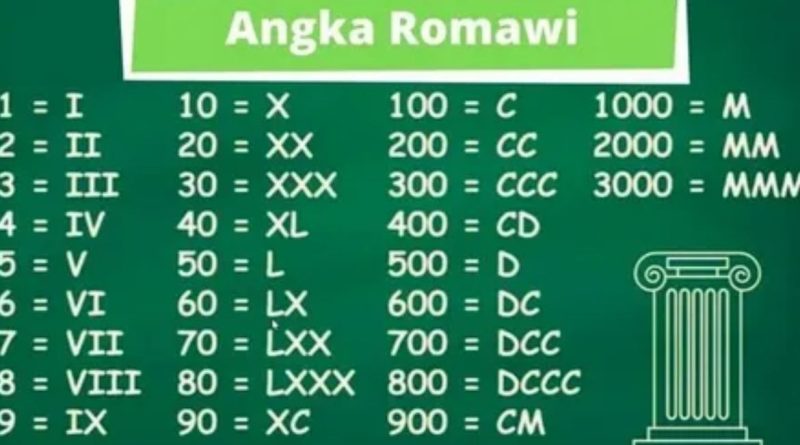
LVIII Roman Numerals: Meaning, Conversion, and Examples Explained
Roman numerals have been used for centuries and are still relevant today, especially in areas like clock faces, movie titles, and formal events. In this article, we’ll delve into the meaning of LVIII in Roman numerals, how to convert it, and provide some examples to help solidify your understanding. One example to note is LVIII Roman Numerals, which represents the number 58. Understanding the conversion process for Roman numerals can be quite useful, whether you’re reading a clock or identifying the number in a title. Let’s break down how this works and explore more examples to help you get comfortable with Roman numeral conversions.
What Does LVIII Mean in Roman Numerals?
The Roman numeral “LVIII” is a combination of several numerals that, when added together, give the number 58. To break it down:
- L = 50
- V = 5
- III = 3
When you add these up (50 + 5 + 3), you get 58.
Roman numerals are based on a system where certain letters represent specific values. These letters are added or subtracted depending on their order, making them a unique way of representing numbers.
How to Convert LVIII Roman Numerals to Regular Numbers
Converting Roman numerals to regular (Arabic) numbers follows a specific set of rules:
- Start from the left: Roman numerals are typically written from largest to smallest, but when a smaller numeral appears before a larger one, it subtracts from the larger numeral. For example, IV means 4 (5 – 1).
- Add the values: If the numerals are in descending order, simply add the values.
Let’s go through the conversion of LVIII step by step:
- L = 50
- V = 5
- III = 3
Now, add them:
50 (L) + 5 (V) + 3 (III) = 58
So, LVIII represents the number 58.
Common Roman Numerals Similar to LVIII
To help you understand Roman numerals better, here are a few other common numerals that follow the same pattern of addition:
- XIV = 14 (10 + 4)
- XXI = 21 (10 + 10 + 1)
- LXX = 70 (50 + 10 + 10)
- XC = 90 (100 – 10)
Each of these numbers uses a combination of the letters I, V, X, L, C, D, and M, which are the foundation of Roman numeral notation.
Practical Uses of LVIII in the Modern World
Roman numerals, including LVIII, are still used today in various contexts. Some of the most common uses include clock faces, movie titles, book chapters, and to denote monarchs or popes (e.g., King Henry VIII or Pope Francis I). Roi Namur is another example of a context where Roman numerals appear, especially in historical or formal references. They are also often used in formal events like the Super Bowl, where LVIII Roman Numerals is the correct notation for the 58th edition.
- Clocks and Watches: Roman numerals are often seen on clock faces, especially in traditional or vintage designs.
- Movie Titles: Many film franchises use Roman numerals to denote sequels, like Rocky IV or Star Wars: Episode VIII.
- Events and Anniversaries: Some formal events, such as the Olympic Games or the Super Bowl, use Roman numerals to mark their editions, like Super Bowl LVIII.
- Legal Documents: Roman numerals are sometimes used in legal contexts, such as section numbering in laws or clauses in contracts.
Fun Facts About Roman Numerals
- Roman numerals don’t have a symbol for zero. The concept of zero didn’t exist in the Roman numeral system, which is part of why they can seem tricky when dealing with modern numbers.
- The letter C represents 100, and M represents 1,000, which is why large numbers are often expressed by combining multiple numerals.
- The Roman numeral system is based on addition and subtraction. For example, IX (9) is a subtractive combination of X (10) and I (1).
Conclusion
Understanding Roman numerals can be both fun and practical, especially when it comes to decoding numbers like LVIII Roman Numerals, which equals 58. Whether you’re converting numerals for an exam, reading a classic clock, or simply interested in learning a part of history, knowing how Roman numerals work is a useful skill.
By breaking down LVIII, you can better understand the Roman numeral system and confidently convert other numerals. As you continue exploring, you’ll see how this ancient numbering system still holds relevance in modern society.